Market basket analysis is a way for businesses to get a better handle on what their customers are really up to. It helps uncover those hidden connections between products that people often buy together. This knowledge lets retailers make smart moves like improving product placement, creating tailored promotions, and just generally making the shopping experience better.
Understanding the Basics of Market Basket Analysis
This type of analysis digs deep into sales data to find patterns in what people buy together. For example, if someone grabs a toothbrush, how likely are they to also pick up some toothpaste? It sounds simple, but this is the core idea behind market basket analysis. By answering questions like this, stores can make informed decisions about where products should go and how to encourage customers to buy related items.
This technique uses machine learning to crunch massive amounts of data from customer transactions. This lets businesses go beyond simple guesswork and find statistically significant patterns. They can spot connections between products that might not be obvious at first glance. This is what makes market basket analysis so powerful. It’s a key tool in data mining – helping businesses identify items frequently purchased together. This affinity analysis, as it’s sometimes called, relies on machine learning to analyze lots of transaction data. It helps businesses understand what makes their customers tick. For instance, analysis might show that people often buy honey with green tea, like this: IF {green tea} THEN {honey}. Knowing this, retailers can improve product placement and cross-selling strategies, creating a smoother shopping experience. Imagine putting related products next to each other – it increases the chances of someone buying both. Smart placement like this can really boost sales. Learn more about market basket analysis here.
How Market Basket Analysis Benefits Businesses
The information gained from this kind of analysis has a direct impact on how well a business does. Picture a grocery store putting chips and salsa side-by-side because they’ve found people usually buy them together. This simple change can significantly increase sales.
Market basket analysis also helps fine-tune marketing strategies. Instead of running generic promotions, retailers can tailor their campaigns to actual customer behavior. This personalized approach gets better results and more customers buying. It lets businesses use their marketing budget more wisely.
Beyond the Basics: Advanced Applications
Optimizing product placement and targeted promotions are just the tip of the iceberg. Market basket analysis can do so much more. It can even improve inventory management, predicting which products need to be stocked together so customers can always find everything they need.
This information is also crucial for building great recommendation engines. By understanding customer preferences, online retailers can suggest things that individual shoppers are likely to be interested in. This makes online shopping more enjoyable and keeps customers coming back. As the retail world keeps changing, market basket analysis will continue to be a crucial tool for understanding and influencing how customers behave.
The Science Behind Shopping Patterns That Matter
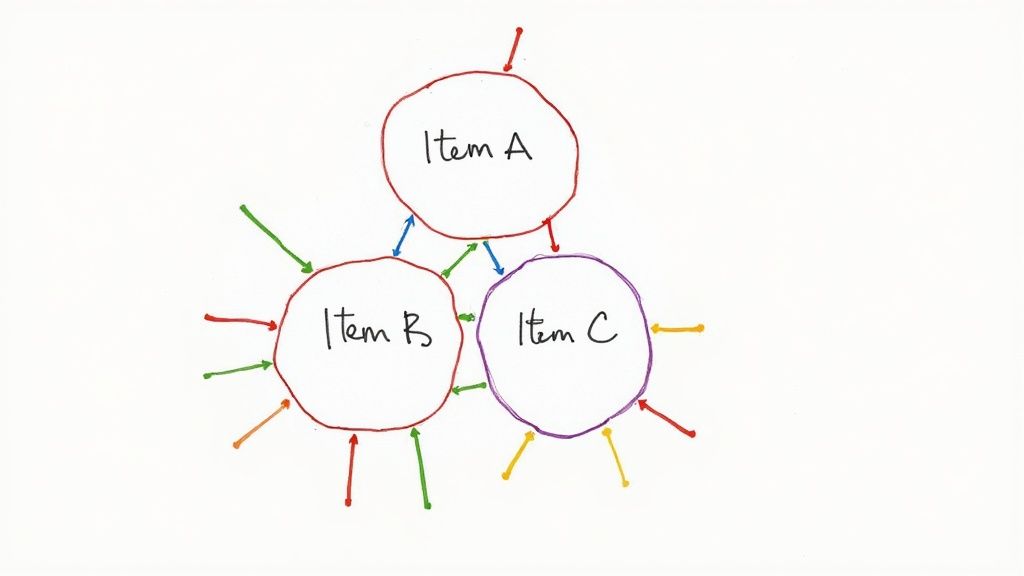
Market basket analysis isn’t some kind of dark art; it’s just clever math. It uses association rules to figure out how items relate to each other. These rules look like this: “IF {Item A} THEN {Item B}”. Basically, if someone buys Item A, they’re probably going to buy Item B, too. But how strong are these relationships? That’s where support, confidence, and lift come into play.
Key Metrics: Support, Confidence, and Lift
Support: This shows how often items appear together in transactions. A higher support means a more common pairing. Think of it as a popularity contest for product combos.
Confidence: This tells us how likely someone is to buy Item B if they’ve already grabbed Item A. A high confidence score means a strong link between the two.
Lift: This shows how much more likely someone is to buy Item B when they buy Item A, compared to buying B on its own. A lift over 1 means a positive relationship; Item A boosts the chances of buying Item B.
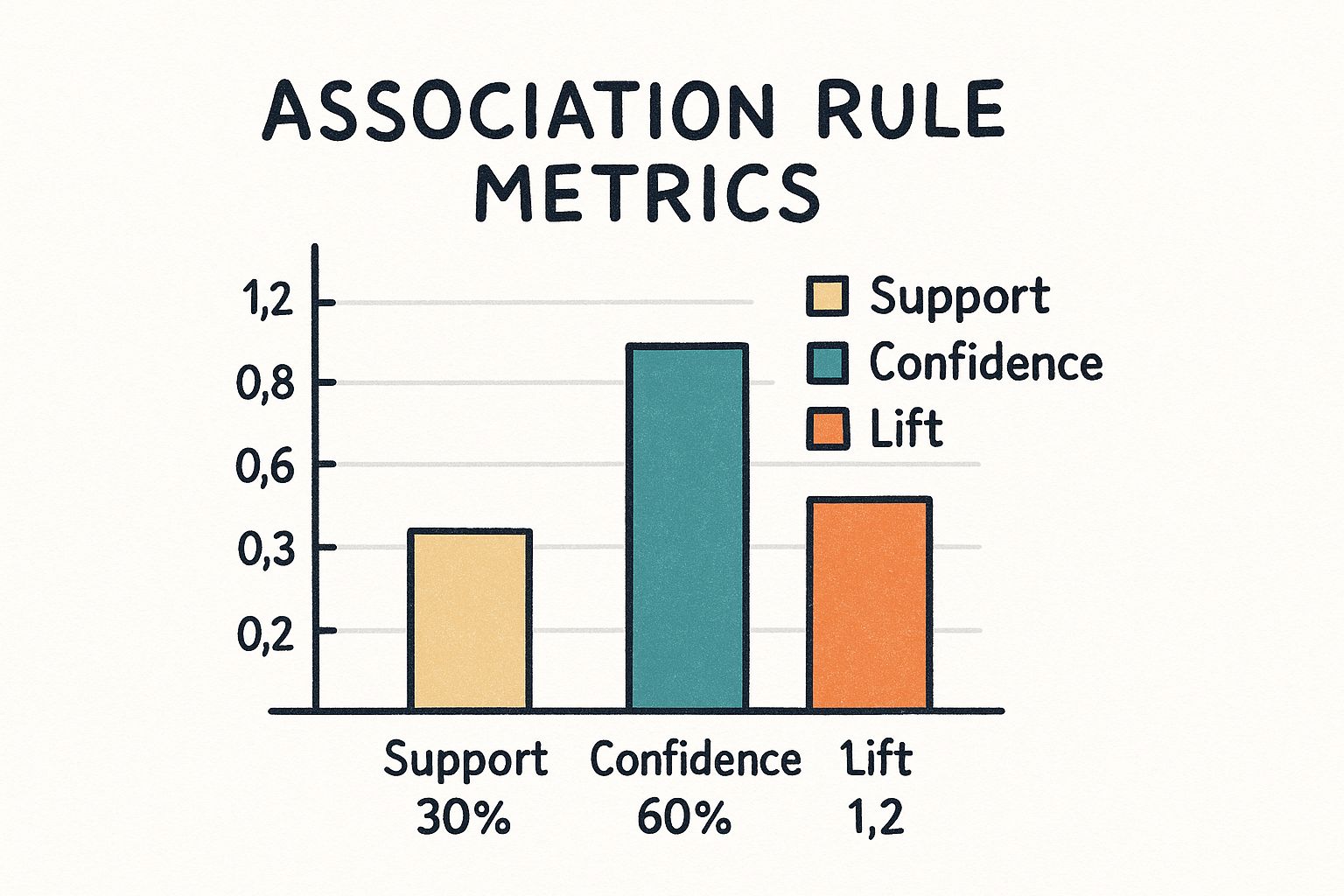
Let’s look at these metrics in action. The infographic below shows example values: Support (30%), Confidence (60%), and Lift (1.2).
This visual sums it up nicely. 30% of transactions include this combo (support), and buying one item gives a 60% chance of buying the other (confidence). The 1.2 lift means buying the first item makes a customer 20% more likely to buy the second, compared to the average shopper. Cool, right?
Before we dive into the Apriori algorithm, let’s take a look at the key metrics in a table format for better understanding.
Here’s a quick look at the metrics we use in market basket analysis:
Metric
Description
Example
Business Significance
Support
How frequently item(s) appear in transactions
30% of transactions contain both diapers and beer
Identifying popular product combinations
Confidence
Probability of buying Item B given Item A is purchased
60% chance of buying beer if diapers are purchased
Understanding product associations
Lift
How much more likely Item B is purchased when Item A is also purchased, compared to buying Item B alone
Buying diapers makes a customer 1.2 times more likely to buy beer
Reveals true relationships, beyond just frequent pairings
This table highlights the different metrics used to analyze the relationships between products purchased together. As you can see, understanding the support, confidence and lift gives retailers valuable insights into customer behaviour.
The Apriori Algorithm: Unveiling Hidden Connections
The Apriori algorithm is the engine of market basket analysis. It finds frequent itemsets in huge datasets, even with millions of transactions. It does this by finding itemsets that meet a minimum support level, step by step. This lets it pinpoint the most popular combos without checking every single possibility. That makes it a powerful tool, even for smaller businesses. It’s how we turn raw transaction data into actionable insights that boost sales.
Modern machine learning takes these insights even further. Combining market basket analysis with other data, like customer demographics and browsing history, allows retailers to get really personal. They can anticipate customer needs and recommend products with impressive accuracy. This deeper understanding of customer behavior opens up exciting new possibilities for the future of retail.
Turning Shopping Insights Into Retail Gold
Market basket analysis isn’t just some fancy retail theory; it’s a powerful tool that’s changing the game. This section dives into how businesses are using this technique to boost their profits and create awesome customer experiences. From small shops to online giants, everyone’s getting in on the action.
Boosting Sales With Strategic Product Placement
One of the best ways to use market basket analysis is to improve product placement. By figuring out which items are often bought together, retailers can put those items close to each other. This simple trick can seriously increase the amount customers spend.
Imagine grabbing some coffee beans. If the filters and sugar are right there, you’re way more likely to toss them in your cart. This means bigger purchases and more sales for the store.
Market basket analysis is now a common practice for retailers looking to boost sales and keep customers happy. A major application is optimizing product placement in stores, catalogs, and on websites. For example, putting coffee and creamer together in a grocery store encourages shoppers to buy both.
Market basket analysis also helps create personalized marketing campaigns that lead to more engagement and higher conversion rates. This targeted approach can significantly boost revenue and build customer loyalty over time. Want to learn more? Check out this article on hidden patterns in market basket analysis. Also, once you’ve identified patterns, focus on strategies to increase basket size.
Crafting Irresistible Bundles and Promotions
Market basket analysis is also great for creating product bundles and promotions. By bundling commonly purchased items at a discount, retailers encourage customers to buy more. These bundles can be physical, like a shampoo and conditioner set, or digital, like a software package.
This not only increases sales but also introduces customers to new products. Interested in learning more about data-driven decisions? Check out this article: How to master data-driven decision making.
Reimagining Retail Experiences Across Channels
The insights from market basket analysis go beyond just product placement and bundles. Retailers are using this information to redesign their stores, both physical and online. This includes everything from the layout of aisles in a supermarket to product recommendations on a website. By making shopping easier and more convenient, retailers can boost customer satisfaction and encourage repeat business.
From Fashion to Electronics: Adapting Across Industries
The best part about market basket analysis is how adaptable it is. The same ideas that work for grocery stores can be used in all sorts of industries, from fashion to electronics.
A clothing retailer might use it to suggest accessories or create outfits based on popular combinations. An electronics store could use it to recommend gadgets or offer deals on compatible devices. This flexibility makes market basket analysis a valuable tool for any retailer trying to understand and influence customer behavior.
Creating Customer Experiences That Convert
Market basket analysis isn’t just about boosting sales. It’s about completely changing how customers shop. Leading brands use these insights to figure out what customers want before they even know it themselves. This makes shopping feel intuitive and personalized, not pushy or generic.
Personalization That Feels Natural
Think about the “recommended for you” sections on your favorite websites. These suggestions, powered by market basket analysis, go beyond just your browsing history. They look at the combined purchases of thousands of customers to offer really relevant products. This kind of personalization is key to a positive customer experience. Instead of scrolling forever, customers see things they’re likely to actually buy.
Designing Seamless Shopping Experiences
Retailers use market basket analysis to redesign stores and websites, making shopping easier and more fun. This could mean rearranging products in a physical store based on what’s usually bought together. Or, it might mean improving a website’s navigation to reflect common customer paths. This removes friction and frustration, creating happy, returning customers.
Smart inventory management, informed by market basket analysis, also plays a big role in customer satisfaction. Imagine wanting hot dogs and buns, but the store is out of buns. Annoying, right? Basket analysis helps make sure related products are always in stock together. This creates a seamless experience, which keeps customers coming back. In retail, market basket analysis is vital for improving customer experience and driving sales. For example, a retailer might notice that people buying televisions often buy soundbars. This can lead to targeted ads or bundled discounts. It also helps develop recommendation engines, optimize product placement, and boost customer loyalty. Learn more about market basket analysis here. For how these insights work in retail, check out this article on how Retail Text Message Marketing can increase sales.
Building Loyalty Through Anticipation
By understanding purchase patterns, retailers can anticipate needs and offer helpful solutions. A hardware store, for example, could create a pre-packaged kit with everything needed for a popular DIY project, all based on market basket analysis. This simplifies shopping and presents the retailer as a problem-solver, building valuable customer loyalty.
These examples show how market basket analysis directly leads to better experiences. Customers spend less time searching, see more relevant suggestions, and enjoy smoother, more convenient shopping trips. This creates a positive feedback loop: happy customers lead to more sales and loyalty, giving retailers even more data to refine their analysis and personalize the customer journey further.
Implementing Basket Analysis Without Breaking the Bank
You don’t need a massive budget or a whole team of data scientists to start using market basket analysis. Whether you’re a small startup just finding your feet or a big retail chain, there are practical ways to dive in. This section will show you how. We’ll share insights from retailers already rocking market basket analysis, and give you the tools to do the same.
Gathering and Using Transaction Data
First things first: you need the right data. Clean, organized transaction data is essential for accurate insights. This means having a system that keeps track of what customers buy in each transaction – it’s the bedrock of your analysis. If you’re an online retailer, your website’s database should already be handling this. If you’re a brick-and-mortar store, your point-of-sale (POS) system is a goldmine.
Once you have the data, you need the right tools. For smaller businesses, simple spreadsheet software and readily available market basket analysis tools might be all you need. As your business grows, you might think about more advanced software or custom solutions. The key is to start with what you have and scale up when necessary. Read also: How to Implement AI in Business.
Choosing The Right Analysis Tools
There are tons of tools out there for market basket analysis, from basic spreadsheets to seriously complex software. For smaller datasets, a spreadsheet can reveal some basic associations. For larger businesses swimming in data, dedicated market basket analysis software can provide deeper insights and fancy features. The best tool for you depends on the size of your business, your tech skills, and your budget.
To help you choose, here’s a comparison table breaking down the different approaches:
To help you choose the best approach for your needs, check out this comparison:
The table below provides a comparison of different market basket analysis implementation approaches, considering business size and resources.
Implementation Approach
Required Resources
Time Investment
Expected Results
Best For
Spreadsheet Software
Basic spreadsheet skills
Low
Basic product associations
Small businesses with limited data
Dedicated Market Basket Analysis Software
Some technical expertise
Moderate
Detailed insights, advanced features
Medium to large businesses
Custom Solutions
Data science team, significant budget
High
Highly tailored analysis
Large enterprises with complex needs
As you can see, there’s an option for every business size and budget. Starting small with a spreadsheet approach can be a great way to get your feet wet before investing in more powerful tools.
Overcoming Implementation Hurdles
Like any new project, market basket analysis has its challenges. Data quality issues, like missing or incorrect data, can really mess things up. Cleaning and prepping your data beforehand is super important. Customer privacy is another big one – be transparent with your customers about how you’re using their data and stick to all the relevant privacy rules.
Finally, integration is key. Your market basket analysis insights should work with your existing systems, not against them. This could mean connecting your analysis software to your inventory management system or your marketing platform. The smoother the integration, the more you’ll get out of your analysis.
Measuring ROI and Building a Sustainable Process
Setting realistic expectations and measuring your return on investment (ROI) is essential. Don’t expect miracles overnight. Market basket analysis takes time and effort. Start small, keep tabs on your progress, and tweak your strategy along the way. By focusing on real results and building a process you can maintain, you can use market basket analysis to boost your business for years to come.
The Future of Basket Analysis: What Smart Retailers Know
Retail is constantly evolving, and so is market basket analysis. Savvy retailers are always on the lookout for innovative ways to leverage this valuable tool. Staying ahead means understanding the latest trends and using them to your advantage. That means thinking beyond simple product pairings and tapping into the power of AI and real-time data.
AI-Powered Personalization: The Human Touch
AI is transforming market basket analysis. By blending traditional analysis with the capabilities of AI, retailers can create incredibly personalized shopping experiences. This goes beyond just recommending products based on past purchases. AI can factor in things like browsing history, demographics, and even social media activity to anticipate a customer’s next desire. It makes the shopping experience feel truly personal and intuitive.
Imagine a clothing store that knows you’ve been eyeing winter coats online. Using AI-enhanced basket analysis, they could recommend matching scarves and gloves, but also suggest styles based on your past purchases and what’s currently trending. That’s a level of personalization traditional methods just can’t achieve.
Omnichannel Insights: Bridging the Gap
Today’s shoppers switch between online and in-store shopping effortlessly. Omnichannel retailers are using market basket analysis to understand these complex journeys. Connecting online and offline data creates a single, unified view of the customer. This allows for consistent product recommendations and promotions across every channel.
The result? A smoother, more integrated experience. For example, a customer who adds an item to their online cart might get a reminder or a related offer when they enter a physical store. This seamless integration builds loyalty and boosts sales.
Context is King: Understanding the “Why” Behind the “Buy”
Adding context to market basket analysis unlocks some seriously valuable insights. Think about things like weather patterns, local events, or even online buzz. Integrating this contextual data helps retailers understand why customers buy certain items at specific times.
A grocery store, for example, might see a jump in ice cream sales during a heatwave. By combining this with market basket analysis, they can recommend related items like toppings or cones, leading to increased sales. Understanding customer behavior allows retailers to anticipate needs and offer relevant products at the right moment.
Real-Time Analysis: Dynamic Pricing and On-the-Fly Personalization
The future of retail is real-time. Smart retailers use real-time analysis to make instant decisions about pricing and promotions. By analyzing current shopping trends and inventory, they can dynamically adjust prices to maximize profits and minimize waste.
Real-time data also allows for hyper-personalized experiences. Picture browsing an online store and getting a personalized discount on something you’ve been looking at, all based on real-time information. This creates a sense of urgency and encourages immediate purchases. By embracing these emerging trends, retailers can use market basket analysis to gain a real edge and build stronger customer relationships. It’s all about staying flexible, experimenting with new tech, and always putting the customer first.
Ready to unleash the power of AI? Visit NILG.AI to discover how our tailored AI solutions can help you streamline your operations and boost your growth.
Special offers, latest news and quality content in your inbox.
Signup single post
Recommended Articles
Article
Transform Your Growth with custom ai software development in 2026
Apr 1, 2026 in
Guide: Explainer
Explore how custom ai software development can boost efficiency, cut costs, and deliver measurable value - find trusted partners and practical steps for 2026.
Discover how AI for customer service can transform your support operations. Learn practical strategies to reduce costs, improve satisfaction, and drive growth.
How Might We Statements: Turn Challenges into Opportunities
Mar 15, 2026 in
Guide: Explainer
Discover how might we statements transform complex challenges into real opportunities. Learn practical crafting tips, workshops, and real-world examples.
We use cookies on our website to give you the most relevant experience by remembering your preferences and repeat visits. By clicking “Accept All”, you consent to the use of ALL the cookies. However, you may visit "Cookie Settings" to provide a controlled consent.
This website uses cookies to improve your experience while you navigate through the website. Out of these, the cookies that are categorized as necessary are stored on your browser as they are essential for the working of basic functionalities of the website. We also use third-party cookies that help us analyze and understand how you use this website. These cookies will be stored in your browser only with your consent. You also have the option to opt-out of these cookies. But opting out of some of these cookies may affect your browsing experience.
Necessary cookies are absolutely essential for the website to function properly. These cookies ensure basic functionalities and security features of the website, anonymously.
Cookie
Duration
Description
cookielawinfo-checkbox-analytics
11 months
This cookie is set by GDPR Cookie Consent plugin. The cookie is used to store the user consent for the cookies in the category "Analytics".
cookielawinfo-checkbox-functional
11 months
The cookie is set by GDPR cookie consent to record the user consent for the cookies in the category "Functional".
cookielawinfo-checkbox-necessary
11 months
This cookie is set by GDPR Cookie Consent plugin. The cookies is used to store the user consent for the cookies in the category "Necessary".
cookielawinfo-checkbox-others
11 months
This cookie is set by GDPR Cookie Consent plugin. The cookie is used to store the user consent for the cookies in the category "Other.
cookielawinfo-checkbox-performance
11 months
This cookie is set by GDPR Cookie Consent plugin. The cookie is used to store the user consent for the cookies in the category "Performance".
viewed_cookie_policy
11 months
The cookie is set by the GDPR Cookie Consent plugin and is used to store whether or not user has consented to the use of cookies. It does not store any personal data.
Functional cookies help to perform certain functionalities like sharing the content of the website on social media platforms, collect feedbacks, and other third-party features.
Performance cookies are used to understand and analyze the key performance indexes of the website which helps in delivering a better user experience for the visitors.
Analytical cookies are used to understand how visitors interact with the website. These cookies help provide information on metrics the number of visitors, bounce rate, traffic source, etc.
Advertisement cookies are used to provide visitors with relevant ads and marketing campaigns. These cookies track visitors across websites and collect information to provide customized ads.